
Meet the new members of the Neuroscience Institute 2025-2026
The Neuroscience Institute is pleased to welcome 11 faculty members to the community. Julia Cox, PhD (Neurobiology), John Downey, PhD (Neurological Surgery), Charles Greenspon, PhD (Neurological Surgery), Joshua Jacobs, PhD (Neurology), Sumin Jang, PhD (Neurology), Pedro Lopes, PhD (Computer Science), Adam Martersteck, PhD (Neurology), Samuel Muscinelli, PhD (Neurobiology), Marcella Noorman, PhD (Neurobiology), Lucas Pinto, MD, PhD (Neurobiology), and Zinan Zhou, PhD (Neurology) joined the Institute in the 2025-2026 academic year.
Learn more about them:

Julia Cox, PhD
Assistant Professor, Department of NEUROBIOLOGY
Dr. Cox completed a bachelor's degree in the Biological Basis of Behavior at the University of Pennsylvania and earned her PhD at the University of California, Berkeley. She then moved to the Princeton Neuroscience Institute as a postdoc and worked as a Research Assistant Professor at Northwestern University.
Her research explores the neural basis of value-based decision making. The Cox lab will use tasks inspired by natural foraging behavior combined with imaging, electrophysiology, and genetic tools for cell type specific recording and manipulation of neural activity to understand how the cortico-subcortical circuits process multiple types of information to guide choice behavior.

John Downey, PhD
Assistant Professor, Department of NEUROLOGICAL SURGERY
Dr. Downey works to develop implanted Brain-Computer Interfaces (BCIs) that will restore independence and capability to people with high-level paralysis or amputation. After placing electrodes in their brain, the BCI measures neural activity as they attempt to move their disabled hand and arm, using it to move a robotic prosthetic hand and arm instead. Once the prosthetic hand touches an object, the BCI provides electrical stimulation back into the brain, so they feel as though they are touching the object with their own hand. This provides them with natural, intuitive control over a prosthetic hand and arm while restoring their ability to feel and manipulate objects.
His research program is focused on sensorimotor neuroscience and neuroengineering related to hand and arm control. Dr. Downey works to better understand how motor cortex controls functional hand and arm movements in increasingly natural situations, with the goal of improving BCI prosthetics.

Charles Greenspon, PhD
Assistant Professor, DEPARTMENT of NEUROLOGICAL SURGERY
Dr. Charles Greenspon earned his PhD in sensory neurophysiology at the University of Nottingham before joining the University of Chicago's Sensorimotor Bionics Group. His research focuses on restoring the sense of touch through intracortical microstimulation (ICMS), with work spanning tactile feedback for bionic limbs, sensory restoration for individuals with amputations or spinal cord injuries, and the neural mechanisms underlying artificial touch percepts.
Greenspon collaborates closely with researchers across institutions, including Robert Gaunt, as part of ongoing multi-site clinical studies pairing ICMS with brain-controlled bionic hands to recreate rich, naturalistic tactile feedback.

Joshua Jacobs, PhD
Professor, Department of Neurology
Dr. Jacobs investigates the neural foundations of human memory and spatial navigation. Using direct brain recordings from neurosurgical patients performing memory and virtual reality navigation tasks, his team has identified novel patterns of neural activity that illuminate unique aspects of human cognition while bridging insights from animal models.
Before joining UChicago, Dr. Jacobs was an Associate Professor at Columbia University. He earned his Bachelor's and Master's degrees in Computer Science from MIT. At UChicago, he looks forward to building collaborations with neurologists, neurosurgeons, and faculty across neuroscience, psychology, and computer science to advance the study of the neural basis of memory and cognition.

Sumin Jang, PhD
Assistant Professor, Department of Neurology
Dr. Jang is coming to Chicago from New York City, where she did her postdoctoral research with Dr. Hynek Wichterle at Columbia University. Sumin is interested in how the human neural development differs from that of other species to result in a larger, more complex CNS. Her research utilizes stem-cell derived organoid models to study the unique behavior of human neural progenitors and the underlying molecular mechanisms involved.

Pedro Lopes, PhD
ASSOCIATE Professor, DEPARTMENT of COMPUTER SCIENCE
Dr. Lopes' research explores integrating computer interfaces directly with the human body, moving beyond traditional wearables—including muscle-stimulation devices that let users manipulate tools they've never encountered before, accelerate reaction time, and even engineered systems that leverage smell to create illusions of temperature. He earned his BSc and MSc from the Technical University of Lisbon and his PhD from the Hasso Plattner Institute at the University of Potsdam, where his dissertation received the Best Dissertation Award. His work has earned seven CHI/UIST Best Paper awards, seven CHI/UIST Honorable Mentions, a Sloan Fellowship, and an NSF CAREER award. A wearable device from his lab that accelerates human reaction time even made it into the Guinness Book of World Records.

Adam Martersteck, PhD
ASSistant Professor, DEPARTMENT of NEUROLOGY
Dr. Martersteck earned his PhD in neuroscience from Northwestern University, training at the Mesulam Center with Drs. Emily Rogalski and Todd Parrish on imaging in primary progressive aphasia, and completed a postdoctoral fellowship at UC Berkeley with Dr. William Jagust focused on PET imaging. His research sits at the intersection of frontotemporal lobar degeneration, Alzheimer's disease, and healthy aging, using interpretable machine learning and neuroimaging to bridge clinical and computational neuroscience and to understand selective vulnerability in atypical dementia syndromes.
Samuel Muscinelli, PhD
ASSistant Professor, DEPARTMENT of NEUROBIOLOGY
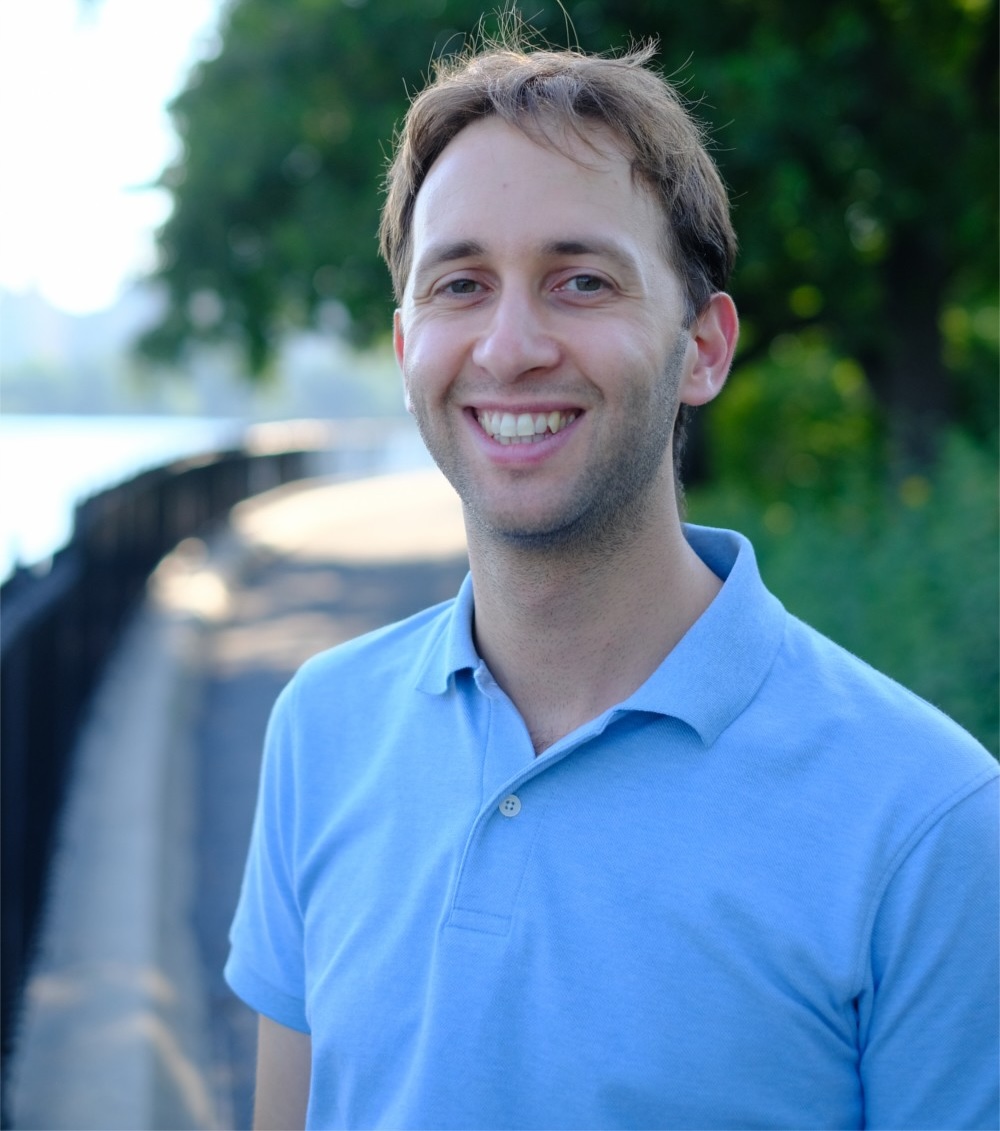
Dr. Muscinelli received a M.Sc. in theoretical physics from the University of Rome "La Sapienza" and a PhD in Neuroscience from École Polytechnique Fédérale de Lausanne. Before joining UChicago, he completed his postdoctoral training at Columbia University, working with Dr. Litwin-Kumar. His research investigates how the anatomical structure of brain circuits both governs and adapts to learning, and explores how network architecture shapes neural representations and how it changes with experience.

Marcella Noorman, PhD
ASSistant Professor, DEPARTMENT of NEUROBIOLOGY
Dr. Noorman received a BS in Mathematics from Belmont University and a PhD in Applied Mathematics from North Carolina State University. Before joining UChicago, she completed her postdoctoral training at Janelia Research Campus under the supervision of Dr. Ann Hermundstad. Her research seeks to determine the essential circuit properties that enable the brain to efficiently and flexibly carry out computations underlying important cognitive capacities, such as decision-making and navigation.

Lucas Pinto, MD, PhD
ASSistant Professor, DEPARTMENT of NEUROBIOLOGY
Dr. Pinto's research aims to understand how neural circuits across many brain areas interact to support decision making. In the Pinto lab, they combine high-throughput behavior in virtual reality, optical, electrophysiological, and genetic tools to measure and manipulate the dynamics of single neurons and neuronal populations, and computational approaches to understand both the behavior and its relationship to neural activity.
Dr. Pinto earned a medical degree and a Master's degree in physiology from the Federal University of Minas Gerais, Brazil. He then completed his PhD in neuroscience at the University of California, Berkeley, and moved to the Princeton Neuroscience Institute for his postdoc. Before joining Chicago, Pinto worked as an Assistant Professor at Northwestern University.

Zinan Zhou, PhD
ASSistant Professor, DEPARTMENT of NEUROLOGY
Dr. Zhou is a neurogeneticist and genomic scientist whose research focuses on how somatic mutations shape human brain aging and neurodegenerative disease. He received his B.S. from Purdue University and earned his Ph.D. at the University of Pennsylvania. He subsequently completed postdoctoral training at Boston Children's Hospital and Harvard Medical School.
At UChicago, Dr. Zhou's lab will integrate studies of human brain tissue with single-cell genomics, computational analyses, and experimental models to determine how somatic mutations arise, expand within cell populations, and contribute to brain dysfunction and neurodegeneration. His current work receives support from the Center for Motor Neuron Disease and the Safadi Faculty Scholar Program.
Please join us in welcoming them to our community!