Welcome to the New Faculty Guide: a practical resource to help orient you to the UChicago neuroscience community. This guide is here to support your work and help you thrive in our academic group.
To learn more about the Neuroscience Institute, please click here.
FACULTY MEMBERSHIPS
There are two types of memberships that you can request after arriving at UChicago. Membership in the Neuroscience Institute provides community, networking opportunities, and access to pilot and equipment grants. Membership in Graduate Programs is necessary for mentoring PhD students. The two primary Neuroscience PhD programs are the Committee on Computational Neuroscience (CNS) and the Committee on Neurobiology (CON), although other PhD programs may also be relevant to your research.
Faculty membership is an official secondary appointment at the University of Chicago. You may hold multiple secondary appointments. Below, you can see the differences between these memberships and what each offers:
Neuroscience Institute Membership
The application process for the Neuroscience Institute Membership consists of a brief cover letter explaining your research and interest in neuroscience, and a copy of your CV. Click here to review the Faculty Membership Criteria.
Committee on Computational Neuroscience (CNS) & Committee on Neurobiology (CON) Membership
The application process for the Graduate Program membership includes an abstract explaining your research, a copy of your CV, and a presentation of a 45-minute research seminar. If you apply to both graduate programs, you will give only one talk. You should arrange to meet with the graduate program chair before applying to ensure you fit as a training faculty member. After you submit your application, we will work with you to schedule the date and time for your seminar.
COMMUNICATIONS
Weekly Neuroscience Newsletter
The Institute sends a weekly newsletter called “Synapse” every Friday afternoon. It highlights events, publications, announcements, and news from across our community. If you have news or events you would like to promote, please contact us, and we will include them in the newsletter (which is sent to the Synapse listserv of 1,000+ subscribers). You can sign up for the listserv here.
INDIVIDUAL NEUROSCIENCE LISTSERVS
We also manage four separate listservs for undergraduate students, graduate students, postdocs/staff scientists, and neuroscience faculty. If you would like to reach these specific groups (e.g., events, grant opportunities, job openings, etc.), please let us know, and we will distribute it to the appropriate list(s).
NEUROSCIENCE POSTDOCS DATABASE
We maintain a postdoc database and a webpage listing all neuroscience postdocs and staff scientists. We update this database annually to keep contact information current and ensure everyone is included on our mailing list for event and seminar announcements. Please let us know whenever a new postdoc joins your lab, or use this form to submit their information, and we will add them to the database and listserv.
COMMUNITY EVENTS
Neuroscience Social
The Neuroscience Institute hosts a monthly Neuroscience Social, typically held on a Friday from 4:00 to 6:00 pm. These events bring the community together and provide an opportunity for students and faculty to engage in discussions and build connections.
Neuroscience Annual Retreat
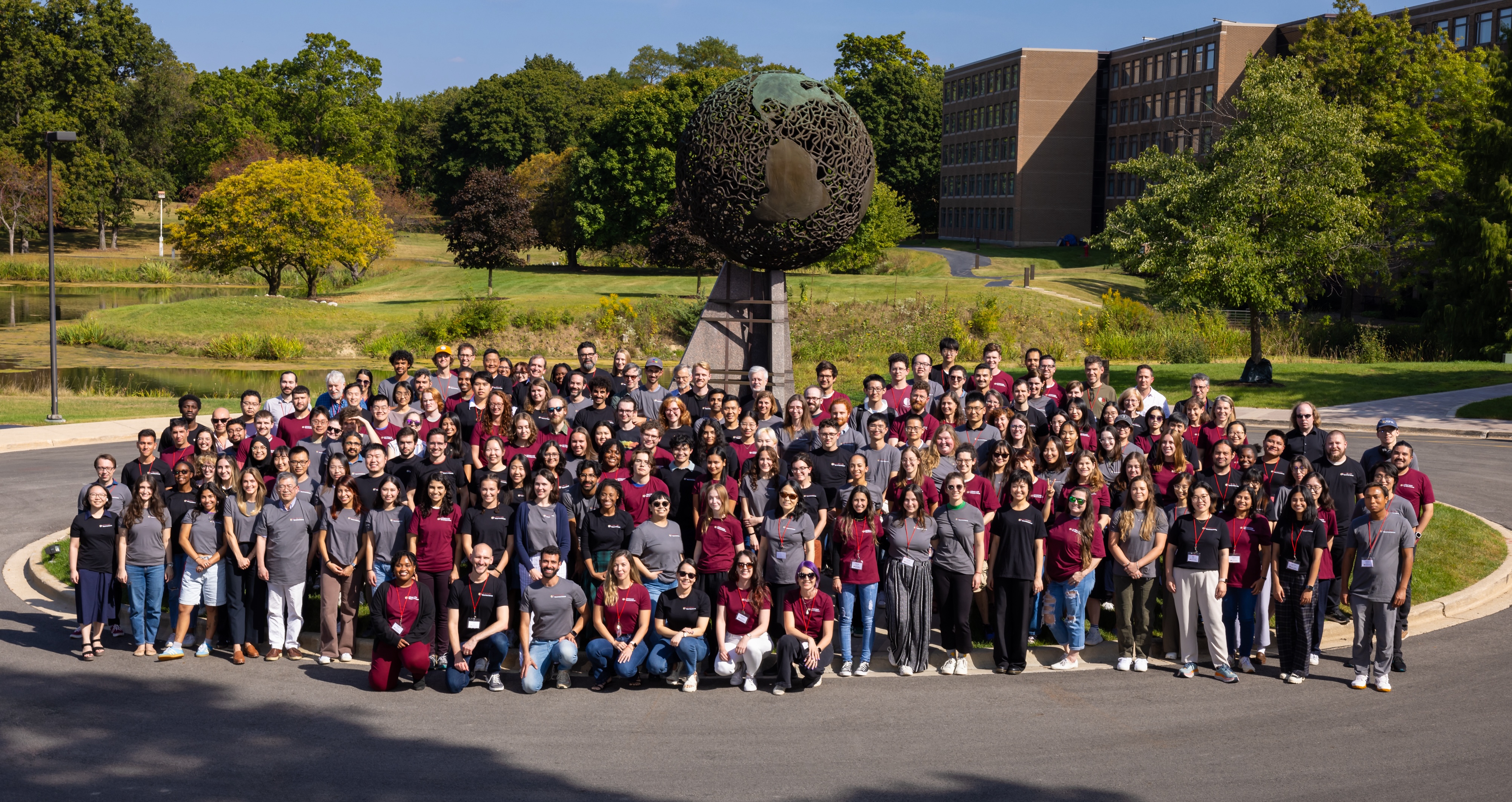
The community reunites every year in September for the annual Retreat. This 1.5-day event features a diverse schedule of talks presented by nationally recognized guests, faculty members, students, and postdocs, and includes poster presentations, career development workshops, and recreational activities.
Neuroscience Retreat in 2024
COMMUNITY CALLS
Neuroscience Institute Travel Awards
The Neuroscience Institute sponsors travel awards to support trainees who need financial assistance to present their work at Neuroscience conferences, workshops, or other professional meetings. These awards help cover eligible travel-related expenses, support professional development and networking opportunities, and highlight and promote the outstanding research conducted by our trainees. Calls for applications are distributed every three months.
Workshop/Conference Proposals
The Institute also sponsors workshops, conferences, and academic events focused on neuroscience. We offer funding to facilitate events organized by graduate students, postdoctoral researchers, faculty, and staff scientists, to foster collaboration, knowledge exchange, and engagement of the broader neuroscience community. Calls for applications are distributed once a year.
Shared Equipment Proposals
Faculty of the Neuroscience Institute are invited to apply for funds to support shared research equipment. Applications are considered for equipment that will be shared by multiple Institute labs. Calls are distributed every other year. Click here to view the list of equipment currently available.
WORKING GROUPS
Autism SPECTRUM DISORDER
The Neuroscience Institute is committed to enhancing dialogue, promoting interdisciplinary collaboration, and identifying opportunities to develop and fund innovative research initiatives spanning clinical, basic, and translational science. In this group, every faculty member offers distinct strengths and insights, and together we have much to contribute toward advancing the understanding and care of individuals with autism spectrum disorder (ASD).
MEET OUR STAFF
If you ever need help, we’re here for you—reach out to the staff member who best fits your needs below:
 Stephanie Dubbeld
Administrative Director, Neuroscience Institute
 Brittni Pratt
Administrative Coordinator, Neuroscience Institute
Brittni also supports departments in collaboration with the Institute for shared equipment, special seminars, working groups, meetings, and symposiums. She supports the Neuroscience undergraduate program with course supplies, the Neuroscience BS Honors course programming, and printing needs. She is also helpful in troubleshooting building card access. If you have questions about the Neuroscience Institute, please reach out to her, and she will direct you to the right person for your needs.
 A.J. Ferretti
Undergraduate Education Coordinator, Neuroscience Undergraduate Major
A.J. Ferretti is the Neuroscience Undergraduate Education Coordinator. A.J. works with the registrar’s office to facilitate neuroscience course operations and ensure our instructors have everything they need. A.J. also works directly with undergraduate Neuroscience majors and minors as they navigate their program requirements and supports 4th-year students as they complete their thesis research. In addition, he collects program data on everything from course enrollments to student outcomes. You can find him in P400.
 Elena Rizzo
Director of Graduate Education, Neuroscience and Medical Physics
 Lili González Hernández
Graduate Education Administrator, Neuroscience and Medical Physics
 Hilary Van Oss
Center Administrator, Grossman Center for Quantitative Biology and Human Behavior and Center for Motor Neuron Disease
Within the Theory Center, she supports the logistical organization of the space and provides financial reimbursements and reconciliations for faculty and students. She works on seminars, events, workshops, symposiums, and other projects. She provides support for the Training Program in Computational Neuroscience (TPCN) for both undergraduate and graduate students.
Under CMND, Hilary coordinates the Pilot Awards, the bi-monthly meetings with the ALS community, high school outreach programs, seminars, and symposiums. Additionally, Hilary works on the DARN/DENDRITES summer research programs, where visiting undergraduate students conduct research under the direction of UChicago faculty mentors.
For all programs, Hilary manages financial tracking and reporting, ensuring all records are kept up to date, the budget is being managed, and services are being paid.
 Manu Ferreira
Website and Communications Specialist, Neuroscience Institute
Manu is responsible for creating content for the Neuroscience Institute, CON, CNS, Medical Physics, NIDA T32, and SEEDS websites and social media accounts. She manages the neuroscience listservs and creates and sends all neuroscience announcements and newsletters - which include the Institute, the undergraduate major, graduate programs, Grossman Center, and CMND. She is the creative mind behind all the Institute's media and graphic materials, such as flyers, posters, brochures, and presentations. Manu maintains the postdocs and staff scientists database, handles faculty memberships for the Neuroscience Institute and the Committees on Computational Neuroscience (CNS) and Neurobiology (CON), and the Neuroscience Institute Travel Awards. She also helps manage incoming and outgoing emails for the Institute, the Skedda booking system, and AV for conference rooms.